Cooking with Maple Syrup: Grades, Savory Uses and Baking Swaps
The sap starts running in our part of Vermont when the days climb above freezing and the nights drop back below it. Some years that happens in late February, most years it is March, and you can tell it has begun by the steam rising from sugarhouses along the back roads in the afternoon. For a few weeks the whole valley smells faintly sweet. It is the season between seasons: too early for the garden, too late for skiing to be any fun, the roads soft with mud.
Most people keep a jug of maple syrup in the refrigerator for pancakes and leave it there. That is a waste. Maple is one of the most useful sweeteners in the kitchen, and its flavor, a little woody, a little caramel, sometimes almost smoky, works as well with mustard, vinegar and roasted meat as it does with butter and flour. Here is how to choose it and how to use it.
The grades
Pure maple syrup in the United States is sold as Grade A, in four color and flavor classes. The color comes from how the sap changes through the season. Early sap tends to make lighter, more delicate syrup, and late-season sap makes darker, stronger syrup, though weather shifts things from year to year. All four are the same sweetness. They differ in flavor.
| Grade A class | What it tastes like | Best uses |
|---|---|---|
| Golden, delicate taste | Light, buttery, gently sweet | Drizzled on yogurt or ice cream, maple cream, sugar on snow |
| Amber, rich taste | Rounder, classic maple flavor | Pancakes, vinaigrettes, everyday cooking |
| Dark, robust taste | Strong caramel, a little bitter at the edges | Glazes, baking, roasted vegetables, baked beans |
| Very dark, strong taste | Deep, almost molasses-like | Baking where you want maple to come through, barbecue sauce, marinades |
For cooking, I keep two jugs: an amber for the table and a dark for the stove and the oven. Delicate syrups lose their character when heated with other strong flavors, so there is no point using a golden syrup in a mustard glaze. Save it for something you will taste on its own.
Make sure the label says pure maple syrup. Pancake syrup is corn syrup with flavoring and behaves differently when cooked. Once opened, real syrup keeps in the refrigerator for many months. If a thin layer of mold ever forms on top, which can happen with syrup kept too long, the old practice was to skim it and reboil the syrup, but I would rather start a fresh jug.
If you cook with maple often, buy it by the half gallon or gallon straight from a sugarhouse during the season, when the new syrup comes in. Pour some into a quart jar for the refrigerator and keep the rest, sealed, in a cool dark cupboard until you need it. An unopened jug keeps well for a year or more. Glass shows off the color, but plastic jugs and tins are fine for storage, and they are what most small producers use. Warm syrup pours more easily and measures more accurately, so stand the measuring cup in hot water for a minute first, or oil it lightly so every drop slides out.
Savory uses
Glazes
Maple and mustard is the most reliable glaze I know. The mustard cuts the sweetness and helps the glaze cling, and maple browns beautifully in a hot oven. The basic ratio is 2 parts maple to 1 part grainy or Dijon mustard, with a splash of cider vinegar and salt. Brush it on chicken, pork tenderloin, salmon or a ham in the last 15 to 20 minutes of cooking. Added earlier, the sugar burns before the meat is done.
Vinaigrettes
A teaspoon or two of maple in a vinaigrette rounds out sharp vinegar and bitter greens without making the dressing taste sweet. The old maple vinaigrette uses lemon juice, mustard and olive oil, and works on any winter salad. For something warmer, the Brussels sprouts with maple walnut vinaigrette is the dish I make for people who think they do not like Brussels sprouts.
Roasted vegetables
Root vegetables and maple belong together. Toss carrots, parsnips, squash or sweet potatoes with oil and salt, roast at 425°F (220°C) until nearly tender, then drizzle with a tablespoon of dark syrup per pound and roast 5 to 10 minutes more. The syrup turns sticky and the edges caramelize. A pinch of cayenne or a few thyme leaves keeps it from tasting like dessert.
Other places a spoonful helps
- In a pot of baked beans, in place of some or all of the molasses.
- In a pan sauce for pork chops, with cider and a knob of butter.
- In a brine for a holiday turkey or a pork roast, about 1/2 cup per gallon.
- In a winter squash soup, stirred in at the end with a little vinegar.
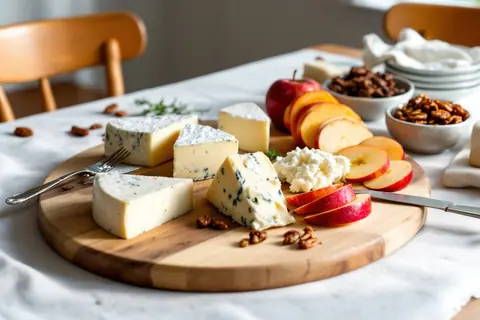
- On roasted nuts for a party. The cheese board guide has my maple-roasted nuts.
Baking with maple syrup
Maple can replace granulated sugar in many quick breads, muffins, cakes and cookies, but it is a liquid, so the recipe needs a few adjustments. These are the ratios I use.
- Swap the sweetener. Use 3/4 cup maple syrup for every 1 cup granulated sugar.
- Cut the liquid. Reduce the other liquids in the recipe (milk, water, juice) by about 3 tablespoons for every cup of syrup you add.
- Lower the oven. Maple browns faster than sugar, so drop the oven temperature by about 25 degrees Fahrenheit (about 15 degrees Celsius) and start checking a few minutes early.
- Add a pinch of baking soda. About 1/4 teaspoon per cup of syrup, to balance its slight acidity and help the rise.
Here is a worked example. A muffin recipe calls for 1 cup sugar and 1 cup milk, baked at 400°F (205°C). The maple version uses 3/4 cup dark maple syrup, 3/4 cup plus 1 tablespoon milk (1 cup minus 3 tablespoons, with the syrup making up the difference), an extra 1/4 teaspoon baking soda, and an oven at 375°F (190°C).
Replacing all the sugar works best in moist, dense baking: muffins, quick breads, gingerbread, bar cookies. In cakes that rely on creaming butter and sugar for lift, I replace only half the sugar, otherwise the crumb turns heavy. Pies are another matter. A pecan pie made with maple, like the old Yankee pecan maple pie, is better than the corn syrup version and needs no adjustment at all.
Maple cream and sugar on snow
Both of these are made by cooking syrup well past its usual thickness, and both are traditional around sugaring time.
Maple cream (sometimes called maple butter, though it has no butter in it) is pure syrup cooked to about 235°F (113°C), cooled undisturbed until it is barely warm, and then stirred, slowly and steadily, until it turns pale, opaque and spreadable. It takes patience and a good candy thermometer, and the stirring step is where people go wrong, since stirring too early makes it grainy. A golden or amber syrup makes the smoothest cream.
Sugar on snow is simpler and more fun. Heat syrup to about 235°F (113°C), then pour it in thin ribbons over a pan of packed clean snow or shaved ice. It sets into soft, chewy taffy that you wind up on a fork. The traditional accompaniments are a plain raised doughnut and a sour pickle, which sounds odd until you try it: the pickle resets your palate for the next round. If you have a candy thermometer and a snowbank, it is a good way to spend a March afternoon with children.
Be careful with hot syrup at these temperatures. It sticks and burns like candy, so keep children back from the pot and do the pouring yourself.
The recipe: maple-mustard chicken thighs
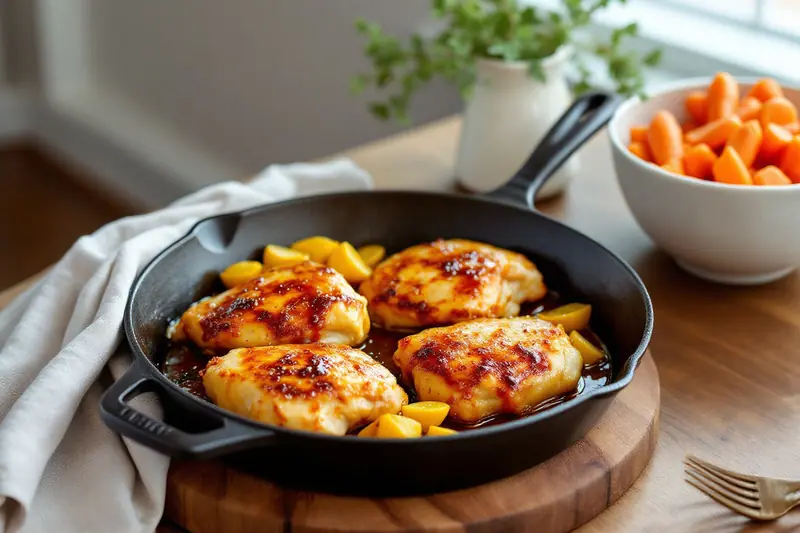
This is a weeknight dish that I also make for a dozen people by doubling it on two sheet pans. Bone-in thighs stay juicy while the glaze cooks down.
From the recipe box
Maple-mustard chicken thighs
Serves 6
- Prep
- 15 min
- Cook
- 40 min
- Rest
- 5 min
- Total
- 1 hr
Chicken
- 3 lb1.35 kg bone-in, skin-on chicken thighs (about 8)
- 1 1/2 tsp7 ml kosher salt
- 1/2 tsp2 ml freshly ground black pepper
- 1 tbsp15 ml olive oil
Glaze
- 1/3 cup80 ml dark pure maple syrup
- 3 tbsp45 ml grainy mustard
- 1 tbsp15 ml Dijon mustard
- 1 tbsp15 ml cider vinegar
- 22 garlic cloves, grated
- 1 tsp5 ml fresh thyme leaves
Method
- Heat the oven to 425°F (220°C) with a rack in the upper third. Line a rimmed sheet pan with foil.
- Pat the thighs dry, season both sides with the salt and pepper, and rub with the oil.
- Arrange them skin side up on the pan with space between each piece.
- Roast for 25 minutes, until the skin is golden and starting to crisp.
- Meanwhile, whisk the maple syrup, both mustards, vinegar, garlic and thyme in a small bowl.
- Spoon off any fat in the pan, then brush the thighs generously with half the glaze.
- Roast 8 minutes, brush with the remaining glaze, and roast 5 to 8 minutes more, until the glaze is bubbling and dark at the edges and the thickest thigh reads 175°F (79°C) near the bone.
- Rest 5 minutes on the pan, then spoon the pan juices over the top before serving.
Notes from the kitchen
- Boneless thighs work too: roast 15 minutes before glazing, and cook to at least 165°F (74°C).
- For twelve, use two pans and swap their positions in the oven halfway through.
Serve it with roasted carrots done in the same oven, and a salad with the maple vinaigrette. The glaze on the pan is the best part, so scrape it up with a piece of bread before it hardens.
Questions from hosts
Can I use maple syrup in place of honey?
Yes, one for one. Maple is thinner than honey, so a glaze or dressing will be a little looser.
Why did my maple glaze burn?
It went on too early or the oven rack was too close to the top. Brush maple glazes on only in the last 15 to 20 minutes, and move the pan down a rack if the edges darken too fast.
Is darker syrup lower quality?
No. Before the current names were adopted, dark syrup was often sold under a lower grade, and many cooks still think of it that way. It is simply stronger, and for cooking it is usually the better choice.
One gray March afternoon, on the way home from town, I passed a sugarhouse with its doors open and a line of pickup trucks outside. The steam was rising straight up in the still air, which means a good boil and, with luck, a long run.
Topics: The Seasonal Table

Nell keeps a big vegetable garden in southern Vermont and cooks from it most of the year. She writes about soups, salads, maple and the seasonal table.