Make-Ahead Thanksgiving Sides: A Three-Day Plan for One Oven
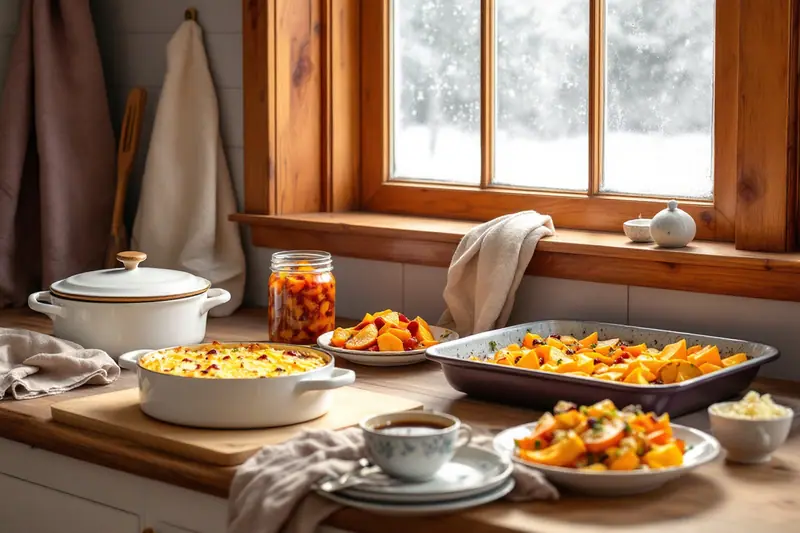
By the middle of November the garden here is down to kale and a few stubborn leeks, and the squash has been curing in the back room for weeks. That is the right moment to think about the sides, because the sides are where Thanksgiving gets crowded. The turkey is one project. The sides are six or eight small projects that all want the oven at four o'clock on the same afternoon.
The answer is to move most of them earlier in the week. Plenty of the classic dishes not only survive two or three days in the refrigerator but come out better: a gratin that has sat overnight slices cleanly, cranberry relish mellows, and stuffing that has been assembled ahead takes on the flavor of the broth all the way through. What follows is the plan I use, built around one standard oven and a family that expects at least five sides on the table.
Which sides hold, and which don't
Not everything should be made ahead. The rule I go by is simple: dishes that are cooked through, dense and moist hold well; dishes that depend on crispness or a just-cooked bright green do not.
| Side | Make ahead? | How far ahead | Reheat |
|---|---|---|---|
| Potato or root gratin | Yes, fully baked | 2 days | Covered, 350°F (175°C), 35 to 45 min |
| Cranberry relish (raw) | Yes | 3 days | Serve cold |
| Cooked cranberry sauce | Yes | 5 days | Serve cold or room temperature |
| Roasted squash | Yes, roasted | 2 days | Uncovered, 400°F (200°C), 15 min |
| Stuffing | Assembled, unbaked | 1 to 2 days | Bake fresh, 375°F (190°C), 45 min |
| Mashed potatoes | Yes, with extra butter | 2 days | Slow cooker on low, 2 to 3 hours |
| Green beans | Blanch only | 2 days | Finish in a skillet, 5 min |
| Green salad | Wash and dress separately | 2 days for washed greens | Toss at the table |
| Rolls | Baked and frozen | 2 weeks | Wrapped in foil, 350°F (175°C), 10 min |
The two that fail when made fully ahead are anything breaded or crumb-topped (the crumbs go soft) and green vegetables cooked to tender (they turn olive drab). For those, do the slow part early and the quick part at the end.
Gratins: bake them fully, then chill under weight
A potato gratin is the best make-ahead side there is. Bake it all the way through two days before, let it cool for an hour, then cover it and refrigerate. The next day the starch has set and you can cut neat squares, which matters when there are twenty people reaching for the same dish.
For a 9 by 13 inch dish that serves 10 to 12, I slice 4 pounds of Yukon Gold potatoes about an eighth of an inch thick, layer them with 3 cups of half-and-half warmed with garlic and thyme, and add 2 cups of grated aged Vermont-style cheddar or Gruyere between the layers. Bake at 375°F (190°C), covered for 45 minutes and uncovered for 30 to 40 more, until a paring knife slides through the center with no resistance and the top is deep gold.
On the day, take it out of the refrigerator an hour before it goes in the oven. Reheat it covered with foil at 350°F (175°C) for 35 to 45 minutes. Check the center with an instant-read thermometer: 165°F (74°C) is what you want for any reheated dish. Uncover it for the last 10 minutes if the top needs to crisp again.
A root gratin of half potatoes and half celery root or parsnips works the same way and is a little lighter. Sweet potatoes give off more liquid, so cut the cream by a third.
Cranberry relish: three days is the sweet spot
The raw relish, the kind made in a food processor with a whole orange, is sharp and almost harsh on the day you make it. By the third day the orange peel has softened, the sugar has drawn out the juice, and the whole thing tastes rounder. I make it on Monday for a Thursday dinner.
For 12 people: one 12-ounce bag of cranberries, one navel orange cut into chunks with the peel on (seeds removed), 3/4 cup sugar and a pinch of salt. Pulse until it is finely chopped but not a puree, then refrigerate in a covered glass jar. Taste it on Wednesday. If it is still too tart, stir in another two tablespoons of sugar. A handful of toasted chopped walnuts goes in right before serving so they stay crunchy.
Cooked cranberry sauce keeps even longer, up to five days, and can be made the weekend before if you prefer it.
Roasted squash: roast hard, reheat hot
Butternut or delicata squash roasted ahead is one of the few vegetables that comes back well, as long as you roast it properly the first time. Cut it in 1-inch cubes or half-moons, toss with olive oil and salt, spread it out on two sheet pans so the pieces don't touch, and roast at 425°F (220°C) for 25 to 30 minutes until the edges are brown. Pale squash reheated will be soggy squash.
Cool it on the pans, then pack it in a shallow container with a paper towel underneath. On Thursday, spread it on a sheet pan and reheat at 400°F (200°C) for about 15 minutes. That slot fits neatly into the time the turkey rests. Finish it with a drizzle of maple syrup and some toasted pumpkin seeds, or with a spoon of the same dressing as the Brussels sprouts with maple walnut vinaigrette, which is another side that does well with its sprouts trimmed a day early.
Stuffing: assemble ahead, bake on the day
Here I part company with the bake-everything-early approach. Stuffing baked in advance and reheated tends to dry out on top and go dense underneath. Assembled ahead and baked fresh, it is better than stuffing made the same morning.
Two days ahead, cube and dry the bread. For 12 people that is about 1 1/2 pounds of a sturdy loaf, cut in 3/4-inch cubes and left out on sheet pans overnight, or dried at 250°F (120°C) for 40 minutes. The day before, cook the onions and celery in butter, mix everything with the herbs and enough broth to moisten the bread without making it soupy (start with 2 1/2 cups), and pack it into a buttered baking dish. Cover tightly and refrigerate.
On Thursday, let it sit out for 30 minutes, drizzle another half cup of broth over the top since the bread will have absorbed the first batch, and bake covered at 375°F (190°C) for 30 minutes, then uncovered for 15 to 20 minutes until the top is crisp. If you add sausage or eggs to the mixture, make sure the center reaches 165°F (74°C).
The Thursday oven plan
This is where making ahead pays off. One oven, one 14-pound turkey, five sides. Say dinner is at 3:00.
| Time | Oven | Elsewhere |
|---|---|---|
| 9:00 | Turkey in at 325°F (165°C) | Take stuffing out to warm a little |
| 12:15 | Turkey checked | Mashed potatoes into the slow cooker on low |
| 1:15 | Turkey out to rest, foil tented | Raise oven to 375°F (190°C) |
| 1:20 | Stuffing and gratin in, both covered | Blanched green beans ready by the stove |
| 1:55 | Uncover stuffing | Gravy on the stovetop |
| 2:10 | Gratin uncovered | Relish and salad dressing out |
| 2:20 | Stuffing and gratin out, squash in at 400°F (200°C) | Carve the turkey |
| 2:35 | Squash out, rolls in for 10 min | Green beans into the skillet |
| 2:50 | Oven off | Everything to the table |
Your turkey may finish earlier or later, so watch the bird, not the clock. A turkey resting under foil stays hot for a good hour, which is the gap that lets the sides take over the oven. If the turkey runs long, the gratin and stuffing can go in on the rack below it at 325°F (165°C) and simply take 15 minutes longer.
Sharing an oven, or borrowing someone else's
When two households are cooking for one table, the easiest arrangement is for the guests to bring the sides that need no oven on the day: the relish, the salad, the mashed potatoes in a slow cooker, the rolls in a basket. Anything that needs reheating should arrive at least an hour before dinner so it can go into the oven while the turkey rests, not after.
If someone offers to bring a gratin or a dish of stuffing, ask them to bring it cold and unbaked or fully chilled, and to tell you how long it needs. Driving a hot casserole across town for 40 minutes puts it right in the range where bacteria grow fastest, between 40°F (4°C) and 140°F (60°C). The guidance in keeping party food safe on the two-hour rule applies to the ride over as much as the buffet.
Other heat sources take pressure off the oven: a slow cooker for mashed potatoes or creamed onions, the stovetop for green beans and gravy, a toaster oven for a small pan of rolls. A cooler with no ice works as an insulated box for a hot dish for about an hour.
A three-day calendar
- Monday: Make the cranberry relish. Bake the rolls and freeze them. Buy the bread for the stuffing.
- Tuesday: Make and bake the gratin. Roast the squash. Cube and dry the bread. Wash and spin the salad greens and store them wrapped in towels.
- Wednesday: Assemble the stuffing. Make the mashed potatoes. Blanch and chill the green beans. Make the salad dressing. Set the table.
- Thursday: Turkey in the morning, then the oven plan above.
For a bigger group, the hour-by-hour plan in Thanksgiving for twenty covers two birds and doubled sides with the same idea.
Storing it all in one refrigerator
The refrigerator fills up faster than the oven. Before Monday, clear one full shelf for the sides. Gratins and stuffing in baking dishes stack if you cover them with sheet pans instead of loose foil. Relish and dressings go in jars in the door. Washed greens go in the crisper wrapped in a clean towel inside a large bag. Keep the refrigerator at 40°F (4°C) or a little below; a cheap appliance thermometer on the middle shelf tells you the truth after the door has been opened forty times on Wednesday.
A salad that waits
A green salad is the one fresh thing on the table, and people are grateful for it after the richness of everything else. Bitter winter greens with pears hold up better than tender lettuce. Something along the lines of the greens with pears, Asiago and cashews can be washed two days ahead and assembled in five minutes. Slice the pears at the last minute, and dress the salad at the table so it is still crisp when the second helpings go around.
Topics: The Seasonal Table | Soups & Salads

Nell keeps a big vegetable garden in southern Vermont and cooks from it most of the year. She writes about soups, salads, maple and the seasonal table.