Graduation Party Menu for 75: A Four-Hour Open House Plan
A graduation open house is not a dinner party. Nobody sits down at the same time, nobody stays for the whole thing, and somebody's grandmother arrives at the very start and leaves in twenty minutes while the graduate's friends show up in the last hour, hungry. Seventy-five guests over four hours sounds like a lot. In practice, it is about 35 to 40 people at the peak and a steady trickle the rest of the time. That changes what you cook, how much, and when it goes out. Here is the menu and plan I use, with the numbers worked out. Late May is the right time to settle it, while there are still a few weekends to prepare.
The menu
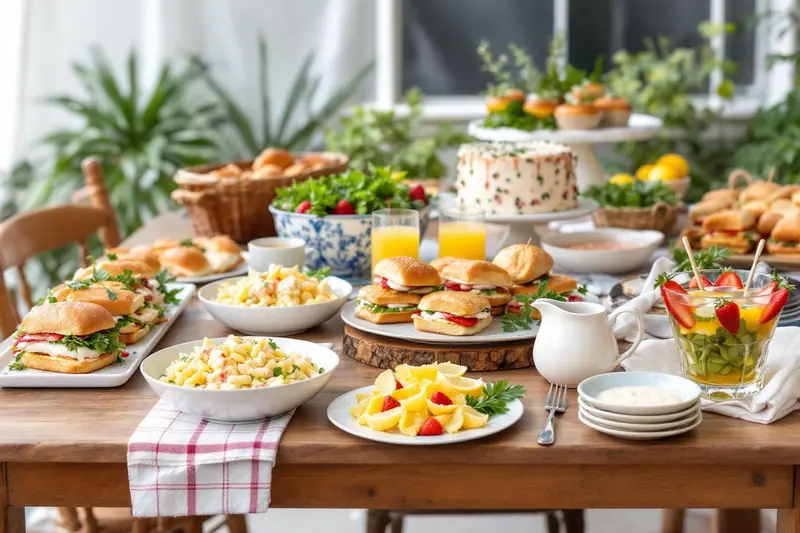
Everything on this list can be made ahead, holds at room temperature or over ice for the time it is out, and can be eaten standing up with a plate in one hand.
To graze
- Crudites with two dips (a curry dip and a herb yogurt dip)
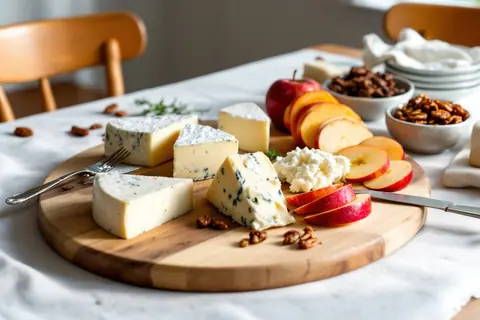
- Cheese board with crackers and grapes
- Watermelon, strawberries and pineapple, cut
- Chips and salsa
Sandwich bar
- Small rolls, split
- Sliced roast turkey, ham and roast beef
- Sliced cheddar and Swiss
- Lettuce, sliced tomato, red onion, pickles
- Mustard, mayonnaise, horseradish sauce
Salads
- Pasta salad with vegetables and a vinaigrette
- Potato salad
- A big green salad, dressing on the side
Sweets
- Sheet cake with the graduate's name
- A tray of brownies or lemon bars
Drinks
- Lemonade, iced tea, water, sparkling water, a few sodas
- Coffee for the last two hours
For a crudite dip that people come back to, the old curry dip is easy to make in quantity and keeps well.
How much food for 75 guests
Guests at a come-and-go party eat less than at a meal, because many of them are going to two or three parties that afternoon. But the graduate's friends eat like they have not seen food in a week. The quantities below assume about 1 1/2 hours as an average stay and a lunch or early afternoon time slot. For other event types, the tables in how much food per guest are a good place to check yourself.
| Item | Per guest | Total for 75 |
|---|---|---|
| Crudites (cut vegetables) | 3 oz | 14 lb |
| Dips | 2 tbsp | About 9 cups (two kinds) |
| Cheese | 1 1/2 oz | 7 lb |
| Crackers | 4 to 5 | 6 to 7 boxes |
| Cut fruit | 3 oz | 14 lb, cut weight |
| Chips | 1 oz | 5 lb |
| Small rolls | 1 1/2 | 10 dozen |
| Sliced meats | 3 oz | 14 lb total (5 turkey, 5 ham, 4 roast beef) |
| Sliced cheese for sandwiches | 1 oz | 5 lb |
| Pasta salad | 3 oz | 14 lb (about 3 lb dry pasta) |
| Potato salad | 3 oz | 14 lb |
| Green salad | 1 cup loose | 5 large bowls, refilled |
| Sheet cake | 1 party slice for 3 of 4 guests | 55 to 60 slices |
| Bars | 1 per guest | 6 dozen |
Remember that not everyone eats everything. Most people take a sandwich, one or two salads and a few vegetables. That is why the sandwich and salad numbers are lower than they would be at a sit-down meal.
Pacing the food so it lasts
This is the difference between a party that looks generous at 4:45 and one where the last guests find a tray of lettuce scraps.
Divide every dish into three rounds. Put out the first round when the party starts. Hold the second and third rounds back in the refrigerator, the cooler or the kitchen.
| Time | What goes out |
|---|---|
| 1:00 (start) | Round one of everything. Platters filled about two-thirds. |
| 2:00 | Check every platter. Replace any that are half empty. |
| 2:30 to 3:30 (peak) | Round two goes out. This is the busiest hour. |
| 3:00 | Cake cutting, speeches, photos. |
| 3:30 | Round three as needed, especially sandwiches and fruit. |
| 4:00 | Coffee and bars. Stop refilling the cheese and crudites. |
| 5:00 | End. |
Use smaller platters and replace them rather than one huge platter that sits out for four hours. A small platter swapped every hour looks fresh, and it takes care of food safety too: perishable food should not sit out for more than 2 hours, or 1 hour above 90°F (32°C). In June in the valley, that 1 hour rule comes up more often than you would think, especially under a tent. Set cold platters over pans of ice outdoors, and keep the mayonnaise salads in bowls nested in larger bowls of ice.
The sandwich and salad bar
A build-your-own sandwich bar is the easiest way to feed a crowd that arrives at different times. It needs one long table, two lines if you can manage it, and a person to keep it tidy.
Set it up in this order, left to right:
- Plates and napkins
- Rolls, split, in a lined basket
- Meats, folded on platters, labeled
- Cheeses
- Lettuce, tomatoes, onions, pickles
- Condiments in bowls with spoons, not squeeze bottles
- Salads
- Forks at the very end
Putting forks at the end means guests are not juggling them while they build a sandwich. If you have room for a second table, put the salads there so the sandwich line keeps moving. A double-sided line, with the same setup running down both sides of the table, helps when 40 people show up in the same half hour.
Split the rolls the morning of, and keep them in their bags until they go out. Fold the meats loosely rather than stacking them flat; it is faster for guests to grab and looks more generous.
Making the salads ahead
Pasta salad and potato salad can both be made the day before. The pasta salad will absorb its dressing overnight, so keep back a cup of vinaigrette and toss it in just before serving. Potato salad tastes better after a night in the refrigerator anyway. Both should be kept at 40°F (4°C) or below until they go out.
The green salad is the only one to assemble on the day. Wash and dry the greens the day before, wrap them in towels in big bags, and refrigerate. Dress them on the table, or leave the dressing on the side. Undressed greens can sit out much longer.
The sheet cake
A full sheet cake (18 by 24 inches) cuts into about 108 party slices at 2 by 2 inches, which is far too much for this crowd. A half sheet (12 by 18 inches) gives 54. For 75 guests, with about three in four eating cake, you want 55 to 60 slices: a half sheet plus a tray of bars covers it.
If you are ordering the cake, order it at least two weeks ahead in June, because every family in town wants one the same weekend. If you are baking it, bake the layers a week ahead and freeze them, then frost and decorate the day before. The guide to cakes from a caterer covers sizes and what to ask when you order.
Cut the cake in the kitchen once the photographs are taken, not at the table. Have a long knife, a tall glass of hot water to dip it in, and a towel to wipe it between cuts.
Drinks math
People drink more than they eat at an afternoon party in June. Plan on about 2 drinks per guest in their first hour and 1 drink an hour after that. With an average stay of 1 1/2 hours, that is about 2 1/2 drinks per guest, or roughly 190 drinks.
| Drink | Share | Servings | What to buy or make |
|---|---|---|---|
| Water and sparkling water | 1/3 | 65 | 4 cases of bottled water or 2 large dispensers, refilled |
| Lemonade and iced tea | 1/3 | 65 | 5 gallons total, made in batches |
| Soda | 1/6 | 30 | 3 twelve-packs |
| Coffee | 1/6 | 30 | One 40-cup urn for the second half |
Ice: 1 pound per guest for drinks, so about 75 pounds, plus another 20 to 30 pounds for keeping platters cold. That is more ice than you will think you need until 3:30, when it runs out. Store bags in coolers in the shade.
Budget tips
A graduation party for 75 can cost more than it should. These are the places I have found to spend less without anyone noticing.
- Roast the turkey breast and the beef yourself, a day or two ahead, and slice them cold. Home-roasted meats cost much less than deli platters and taste better.
- Buy whole vegetables and cut the crudites yourself the day before. Pre-cut trays cost about twice as much.
- Watermelon is the cheapest fruit per serving in June. Use it generously.
- Make lemonade and iced tea from scratch in big batches; bottled drinks add up quickly.
- Skip a third salad. Two good ones and a green salad are plenty.
- Borrow tables, coolers and drink dispensers from neighbors, family and the church.
- If you are hiring help, a drop-off order of just the salads or the sandwiches frees up your time without paying for a full meal. The notes on hosting with drop-off catering explain how to receive and plate it.
The last week
- Seven days ahead: bake and freeze cake layers; confirm rentals and borrowed tables.
- Three days ahead: shop for everything that keeps (drinks, chips, crackers, paper goods, condiments).
- Two days ahead: roast the meats; make the dips.
- One day ahead: make the pasta and potato salads; cut vegetables and fruit; slice meats and cheeses; wash greens; frost the cake; set up the tables.
- The morning of: split rolls, fill platters, make lemonade and tea, buy the ice, assign someone to watch the buffet.
At 5:00, when the last friends of the graduate are hanging around the cooler, the leftover sandwich makings go into shallow containers and the refrigerator. Tomorrow morning they become lunch for the family, and the graduate eats three before noon.
Topics: Menus & Planning | Party Food & Hors d'Oeuvres

Lorna has cooked for church suppers, family reunions and a good many backyard weddings in the Connecticut River valley. She writes about menus, quantities and keeping a party on schedule.