HomeParty Food & Hors d'Oeuvres
New England Cheese Board for a Party: Types, Amounts, Timing
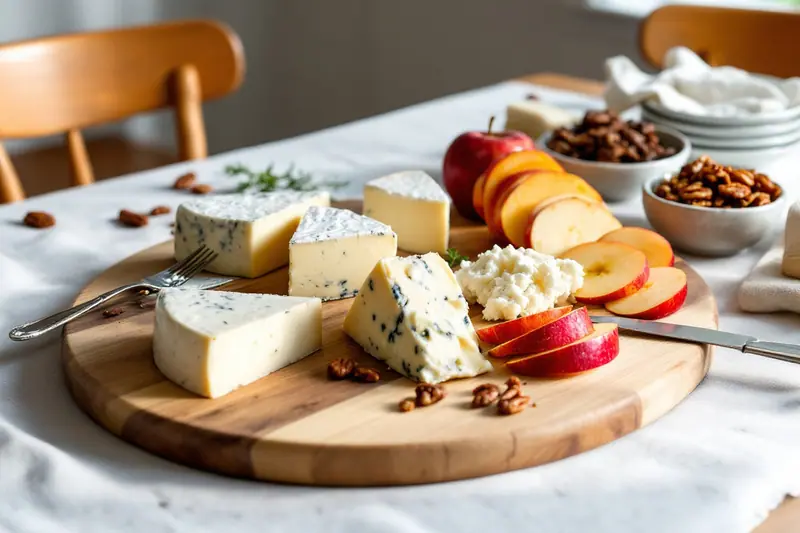
By the third week of November the garden is put to bed, the woodpile is stacked, and the evenings come early enough that people start wanting to gather indoors. A cheese board is what I set out for nearly every party between now and New Year's. It asks for no cooking, it can be assembled in twenty minutes, and it sits happily on a sideboard while the host does something else. It also shows off what this part of the country does well. Vermont, New Hampshire and the hill towns of Massachusetts make cheese in nearly every style, and you can build a whole board from cheeses made within a few hours' drive.
I do not name makers here, because the point is to learn the types and then buy whatever good versions your shop or farmers' market carries. Ask to taste. Any cheese counter worth its rent will let you.
Five types that cover the board
A good board has contrast: something firm and something soft, something mild and something sharp, at least one cheese that looks dramatic when cut. Five types give you that without crowding.
Aged cheddar
The backbone. Look for a white cheddar aged at least a year, which gives you the dry, slightly crumbly texture and the small crunchy crystals that people love. Two-year and older cheddars are sharper and drier. A clothbound cheddar, wrapped and aged in cloth rather than plastic, has an earthier flavor and a thin natural rind. Cheddar is the one cheese every guest will eat, so buy more of it than anything else.
Alpine-style
New England dairies make firm, nutty cheeses in the style of the mountain cheeses of Switzerland and France: smooth, a little sweet, with a long finish that tastes of brown butter and toasted hazelnuts. They are firm enough to slice thin and they pair with almost every accompaniment on the board.
Bloomy rind
Soft cheeses with a white, velvety rind, in the family of Brie and Camembert. Many small dairies make these in small rounds or squares. A ripe one gives slightly when pressed at the center and smells of mushrooms and cream, not ammonia. Buy it a day or two before the party and keep it in its paper in the refrigerator.
Fresh goat cheese
A log or a small round of fresh chèvre, bright and tangy and soft enough to spread. It is the lightest thing on the board and a good counterweight to the cheddar and the blue. Some versions come rolled in ash, herbs or cracked pepper. A plain one drizzled with a little honey at the last minute is just as good.
Blue
One blue is enough. A firm, crumbly blue is easier for guests to serve themselves than a creamy one that collapses under a knife. Blues are strong, and many people take only a sliver, so you can buy less.
How much to buy
The amount depends on whether the cheese is one of several things or the main event. As one item among other hors d'oeuvres before dinner, plan on 2 to 3 ounces of cheese per guest in total. For a cocktail party where the cheese board is a major part of the food, plan on 4 to 5 ounces. The guide to how much food per guest has the wider picture, if you are also putting out dips and passed food.
Here is the split I use for a party where the board shares the table with other food, at about 3 ounces per guest.
| Cheese | 12 guests | 20 guests | 30 guests |
|---|---|---|---|
| Aged cheddar | 12 oz | 1 1/4 lb | 1 3/4 lb |
| Alpine-style | 8 oz | 14 oz | 1 1/4 lb |
| Bloomy rind | 6 oz | 10 oz | 1 lb |
| Fresh goat | 6 oz | 8 oz | 12 oz |
| Blue | 4 oz | 6 oz | 10 oz |
| Total | about 2 1/4 lb | about 3 3/4 lb | about 5 3/4 lb |
For thirty guests I make two boards rather than one large one, and put them at opposite ends of the room so the crowd spreads out.
Cutting each cheese
Cut the firm cheeses before guests arrive. People are shy about being the first to cut into a whole wedge, and a pre-cut board empties faster and more evenly. Leave the soft cheeses mostly whole, with one or two pieces cut so it is obvious how to proceed.
- Aged cheddar: too crumbly for neat slices. Break it into rough chunks with the tip of a short, stiff knife, the way you would break up a chocolate bar. The broken faces look better than cut ones.
- Alpine-style: cut a wedge into long slices about 1/4 inch thick, then cut each slice in half on the diagonal into triangles. Trim off the hard rind if it is waxed or very thick.
- Bloomy rind: cut a round into wedges from the center, like a pie, and cut two of them before serving. A square goes into strips. Leave the rind on; it is part of the cheese.
- Fresh goat: slice a log into rounds with a knife dipped in hot water and wiped dry between cuts, or with a length of unflavored dental floss pulled taut. Leave half the log whole with a spreader beside it.
- Blue: cut a wedge into smaller wedges along the length, so each piece has a bit of the creamy center and a bit of the edge.
Give each cheese its own knife. Blue on the cheddar knife is how a board turns muddy in an hour.
What goes with it
Apples and pears
This is the season for them. Slice firm, crisp apples into thin wedges no more than half an hour before setting out and toss them gently with a little lemon juice and water to slow browning. Use two kinds if you can, one sweet and one tart. Pears should be ripe but still firm at the neck.
Maple-roasted nuts
A small bowl of warm nuts glazed with maple syrup does more for the board than anything else you can add. The recipe is below, and the nuts keep for a week in a tin, so make a double batch and use the rest through the holidays.
Chutney or a fruit spread
An apple, cranberry or pear chutney cuts through the cheddar and the blue. Spoon it into a small bowl with its own spoon. Fig or quince paste, sliced, is good with the alpine cheese.
Bread and crackers
Plain water crackers and a sliced baguette, plus one darker cracker with seeds or rye. Avoid strongly flavored crackers; they fight the cheese. Plan on 4 to 6 crackers or bread slices per guest.
A little honey
A small jar of honey with a dipper next to the goat cheese and the blue. Local wildflower honey is easy to find in the fall.
Timing
Cheese tastes best when it is not cold. Take the firm cheeses out of the refrigerator about an hour before guests arrive, and the soft ones 30 to 45 minutes before. Cut them, arrange them, and cover the board loosely with a clean towel until the doorbell rings.
Hard aged cheeses like cheddar and alpine-style cheeses are forgiving at room temperature for a whole evening. The fresh goat cheese and the bloomy rind are softer and moister, and they should follow the usual party rule of about two hours out, then back into a refrigerator at 40°F (4°C) or below. For a long party, set out half the soft cheese at the start and refresh the board with a cold piece from the refrigerator halfway through rather than letting one piece sit for four hours. The guide to keeping party food safe has the full timing rules for buffets.
Here is how a 7:00 party runs in my kitchen:
- 5:30 Make or warm the maple nuts if they are not done already. Arrange crackers in a basket.
- 6:00 Take the cheddar, alpine-style and blue out of the refrigerator. Cut and arrange them on the board.
- 6:20 Take the bloomy rind and goat cheese out. Set them on the board whole, with one cut.
- 6:40 Slice the apples and pears, toss with lemon water, and tuck them in. Spoon chutney and honey into small bowls.
- 6:55 Remove the towel. Light the candles.
- 8:30 Swap in fresh soft cheese and more apples.
The maple-roasted nuts
From the recipe box
Maple-roasted pecans and walnuts
About 4 cups, for two boards
- Prep
- 10 min
- Cook
- 20 min
- Rest
- 15 min
- Total
- 45 min
Nuts
- 2 cups200 g pecan halves
- 2 cups200 g walnut halves
- 1/3 cup80 ml pure maple syrup, dark or very dark
- 2 tbsp28 g unsalted butter, melted
- 1 tsp5 ml flaky or kosher salt
- 1/4 tsp1 ml cayenne pepper
- 1 tsp5 ml fresh rosemary, finely chopped
Method
- Heat the oven to 325°F (165°C) and line a rimmed sheet pan with parchment.
- Stir the maple syrup, melted butter, salt and cayenne together in a large bowl.
- Add the nuts and toss until every piece is coated and glossy.
- Spread the nuts in a single layer on the pan, leaving a little space between them.
- Roast for 18 to 22 minutes, stirring once halfway, until the nuts smell toasted and the glaze has gone from wet to sticky and bubbling.
- Sprinkle with the rosemary and a little more salt while still hot.
- Cool on the pan for 15 minutes; the glaze crisps as it cools. Break apart any clumps.
Notes from the kitchen
- Store in an airtight tin for up to a week. Warm for 5 minutes at 300°F (150°C) before serving if you like them warm.
Questions from hosts
Should I take the rinds off?
Leave natural rinds on the bloomy cheese and the blue; guests can decide. Remove wax and very hard rinds from the alpine-style and cheddar before you cut, since nobody eats them.
Can I set the board up the day before?
Cut the firm cheeses the morning of the party at the earliest, and wrap them tightly in waxed paper and then plastic. Cheese cut the night before dries at the edges.
What about leftovers?
Wrap each cheese separately in waxed or parchment paper, then loosely in a bag, and refrigerate. The firm ones grate well into a gratin or a soup later in the week. If you serve passed hors d'oeuvres at the same party, leftover cheddar makes a quick round of gougères the next time.
The last thing I put on the board is a small sprig of rosemary or a few bay leaves from the pot on the windowsill, tucked at one corner, because the light is short now and a little green is welcome.
Topics: Party Food & Hors d'Oeuvres | The Seasonal Table

Nell keeps a big vegetable garden in southern Vermont and cooks from it most of the year. She writes about soups, salads, maple and the seasonal table.