Maple Vinaigrette for Fall and Winter Salads
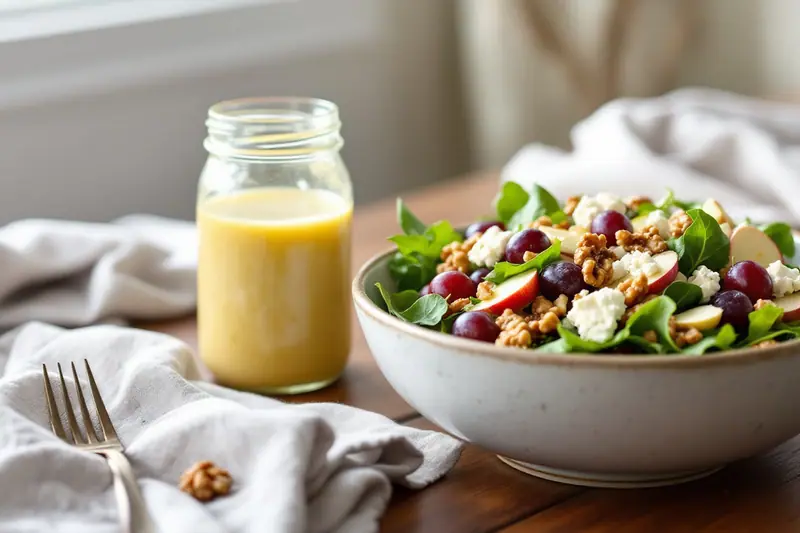
By December the garden has gone quiet. The last of the kale stands stiff with frost, the carrots are in sand in the cellar, and most of what I put in a salad comes from the market or the root bin. That is exactly when this dressing earns its place. It is a simple jar of olive oil, lemon juice, pure maple syrup and mustard, shaken together and kept in the refrigerator door, and it turns a bowl of greens, a crisp apple, a handful of nuts and some fresh goat cheese into lunch.
The maple is there for roundness more than sweetness. A good vinaigrette needs something to soften the acid, and maple does it with a warm, slightly smoky depth that suits the cold months. The mustard holds the oil and lemon together so the dressing stays creamy for a while after shaking, and it gives a little bite that keeps the maple honest.
Getting the balance right
The classic vinaigrette ratio is three parts oil to one part acid. This one runs sharper, closer to two to one, because the maple and mustard soften the lemon and because winter salads with apples and cheese want more brightness than a plain bowl of lettuce. If you like a milder dressing, add oil a tablespoon at a time and taste on a leaf, not from a spoon. A dressing always tastes stronger on its own than it does on greens.
- Lemon juice: squeeze it fresh. Bottled juice has a flat, cooked taste that shows here. Three to four lemons give about half a cup.
- Maple syrup: a darker, robust syrup has more flavor than the pale golden kind, and in a dressing you want the maple to come through.
- Mustard: smooth Dijon is the backbone. A spoonful of plain yellow mustard alongside it adds a tangy, almost picnic note that some people love; it is optional.
- Olive oil: use a mild, fruity extra-virgin oil. A very peppery oil fights with the maple. Half olive oil and half a neutral oil such as sunflower makes a gentler dressing.
Mixing it
You can whisk it in a bowl, but a jar is easier and gives you the storage container at the same time. Put everything except the oil in the jar, shake until the mustard dissolves, then add the oil and shake hard for 20 seconds. The dressing should turn pale, cloudy and slightly thick. A stick blender in a tall jar makes it creamier still and keeps it emulsified longer, which is useful for a buffet.
From the recipe box
Maple vinaigrette
About 2 cups
- Prep
- 10 min
- Cook
- 0 min
- Total
- 10 min
Vinaigrette
- 1/2 cup120 ml fresh lemon juice (3 to 4 lemons)
- 1/4 cup60 ml pure maple syrup, dark and robust
- 3 tbsp45 ml smooth Dijon mustard
- 1 tbsp15 ml yellow mustard (optional)
- 3/4 tsp4 ml fine salt, plus more to taste
- 1/2 tsp2.5 ml freshly ground black pepper
- 1 cup240 ml mild extra-virgin olive oil
Method
- Squeeze the lemons and strain out the seeds and any large bits of pulp.
- Put the lemon juice, maple syrup, both mustards, salt and pepper in a 1-pint glass jar.
- Close the lid and shake until the mustard has dissolved and the mixture looks even.
- Add the olive oil, close the jar tightly and shake hard for about 20 seconds, until the dressing is pale, cloudy and slightly thick.
- Dip a salad leaf in the dressing and taste; add more salt, a little more maple or a tablespoon more oil until it tastes balanced on the leaf.
- Store the jar in the refrigerator and shake it again just before using.
Notes from the kitchen
- Olive oil firms up in the cold; let the jar sit at room temperature for 15 to 20 minutes before shaking.
- Use about 1 tablespoon of dressing for each 2 loosely packed cups of greens.
Building the salad
The dressing likes salads with a mix of crisp, sweet, crunchy and creamy things. My winter version goes like this, for each person:
- 2 loosely packed cups of greens: a mix of tender lettuce with something sturdier, such as frisee, arugula or thin ribbons of kale
- Half a crisp apple, cored and sliced thin, or a small handful of halved red grapes
- 2 tablespoons of toasted walnuts or pecans
- About an ounce of fresh goat cheese, crumbled into small pieces
Slice the apples at the last minute, or toss them with a spoonful of the dressing right away so the lemon keeps them from browning. Dress the greens lightly in a wide bowl, using your hands to coat every leaf, then scatter the fruit, nuts and cheese over the top so they stay visible instead of sinking. A thin slice of red onion soaked for ten minutes in cold water is a good addition if you want some sharpness.
A big jar for a buffet
This dressing is one of the easiest things to make ahead for a holiday open house or a potluck, because it keeps and it travels. For a buffet I make a double or triple batch in a quart jar and bring the salad components in separate containers to assemble on site.
Here is how the quantities work out for a buffet salad when there are other dishes on the table:
| Guests | Greens | Apples | Nuts | Goat cheese | Dressing |
|---|---|---|---|---|---|
| 12 | 1 1/2 lb (680 g) | 4 | 1 1/2 cups | 8 oz (225 g) | 1 1/2 cups |
| 25 | 3 lb (1.35 kg) | 8 | 3 cups | 1 lb (450 g) | 3 cups |
| 50 | 6 lb (2.7 kg) | 16 | 6 cups | 2 lb (900 g) | 6 cups |
Do not dress a big salad all at once. On a buffet the bottom of the bowl goes soggy within half an hour. Dress about a third of it, set it out, and keep the rest of the greens chilled and covered in a damp towel to refresh the bowl as it empties. Set a small pitcher of extra dressing beside the bowl for people who want more.
How long it keeps
Because it has no garlic, shallot or fresh herbs, this vinaigrette keeps well: up to 2 weeks in a closed jar in the refrigerator. The oil will thicken and may look cloudy or even solid when cold. That is normal and goes away after 15 to 20 minutes on the counter and a good shake. If you add minced shallot or garlic for a particular salad, mix only what you need and use it within 3 or 4 days.
On a buffet table the dressing itself is fine at room temperature for the length of the party. The salad with goat cheese should follow the usual rule for dairy: no more than 2 hours out, then back in the refrigerator or into the compost.
Other uses
The same jar dresses a warm salad of roasted squash and lentils, makes a quick glaze for roasted carrots in the last five minutes of cooking, and is very good spooned over sliced pears with blue cheese. It also goes well with bitter winter greens, like the salad of endive and radicchio with pears and cashews, and if you like maple with your vegetables, the Brussels sprouts with a warm maple walnut vinaigrette carry the same idea to the hot side of the table. More cold-weather salads are collected under Soups and Salads.
I keep a jar of it going from the first apples in September until the last of the stored ones go soft in March. When it runs low, I make more on a Sunday, while the kettle is on.
Topics: Soups & Salads | The Seasonal Table

Nell keeps a big vegetable garden in southern Vermont and cooks from it most of the year. She writes about soups, salads, maple and the seasonal table.