Chocolate Goat Cheese Cheesecake in a 7-Inch Pan
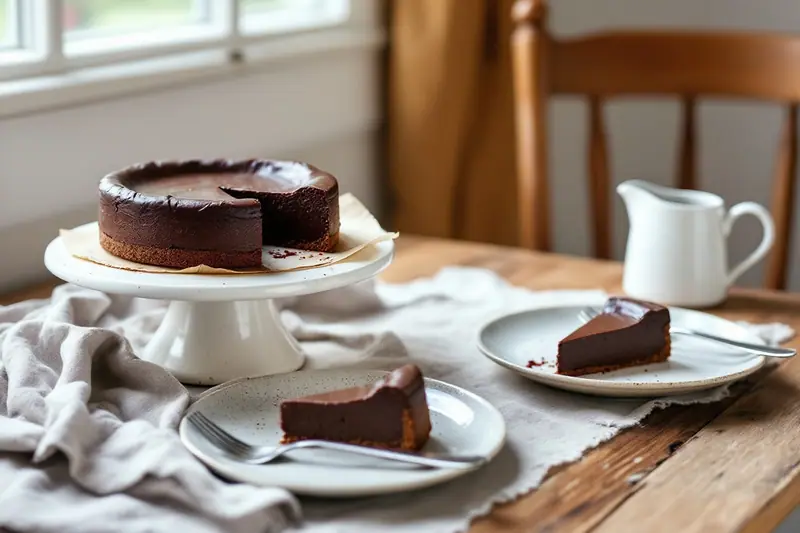
Fresh goat cheese makes a cheesecake that tastes like a cheesecake, only more interesting. It is tangier than cream cheese and a little lighter on the tongue, and against bittersweet chocolate that tang reads as brightness rather than as goat. People who swear they do not like goat cheese eat a slice and ask what makes it so good. It is also a thoughtful thing to bring when a few guests at a June party prefer to skip cow's-milk cheese; just be clear about what is in the crust, which I explain below.
This version is small on purpose: a 7-inch springform, which gives 12 to 16 slim slices of something very rich. That is the right size for a shower, a graduation table with other desserts, or a dinner for eight with leftovers. It bakes gently in a water bath and spends a night in the refrigerator, so all the work happens a day ahead.
Choosing the goat cheese
Use fresh, soft, rindless goat cheese, the kind sold in logs or tubs, not anything aged or crumbly. It should be creamy enough to spread at room temperature. If yours is on the dry side, replace a quarter of it (4 ounces of the pound) with a soft, spreadable goat cheese or goat's-milk ricotta, which loosens the batter and gives a smoother slice.
Let the cheese sit out for an hour before mixing. Cold goat cheese breaks into small lumps that never quite smooth out, and those lumps show up as white flecks in a dark cake. Taste a corner before you start. Some fresh goat cheese is quite salty, and if yours is, leave out the pinch of salt in the batter.
The crust, and a note for guests
A plain graham cracker crust is the classic choice and I like its honeyed crunch against the chocolate. It uses melted butter. If the point of the cake is to serve guests who avoid cow's milk, swap the butter for a neutral oil or a plant-based baking stick, and check that your graham crackers and chocolate do not list milk among their ingredients. Then put a small card by the cake that says what it is made with, so people can decide for themselves. A crust of crushed chocolate wafer cookies works too and makes the whole cake look darker and more dramatic.
Why the water bath matters
Cheesecake is a custard, and custards set best with gentle, even heat. A water bath keeps the edges from rising and cracking before the center sets, and it keeps the surface moist. For a 7-inch pan, wrap the outside of the springform in two layers of heavy-duty foil, pressing it up the sides, so no water can seep through the seam. Set it in a roasting pan or a 9 by 13 baking dish and pour in hot water to come about an inch up the side of the springform.
Bake at 325°F (165°C). The cake is done when the outer 1 1/2 inches looks set and slightly puffed and the center still jiggles like firm gelatin when you nudge the pan; an instant-read thermometer in the center should show about 150°F (66°C). It firms the rest of the way as it cools. Overbaking is what causes a dry, cracked top, so err on the side of the wobble.
From the recipe box
Chocolate goat cheese cheesecake
One 7-inch cheesecake, 12 to 16 slim slices
- Prep
- 30 min
- Cook
- 1 hr 10 min
- Rest
- 8 hr
- Total
- 9 hr 40 min
Crust
- 3/4 cup90 g graham cracker crumbs
- 2 tbsp25 g granulated sugar
- 4 tbsp57 g unsalted butter, melted (or neutral oil)
Filling
- 3 oz85 g semisweet or bittersweet chocolate, chopped
- 1 lb450 g fresh soft goat cheese, at room temperature
- 3/4 cup150 g granulated sugar
- 1 tbsp6 g unsweetened cocoa powder
- 2 large2 large eggs, at room temperature
- 1 tsp5 ml vanilla extract
- 1 pinch1 pinch fine salt (skip if the cheese is salty)
Method
- Heat the oven to 325°F (165°C) and wrap the outside of a 7-inch springform pan in two layers of heavy-duty foil.
- Stir the crumbs, sugar and melted butter until evenly moist, press firmly into the bottom of the pan and bake 10 minutes, until fragrant; cool while you mix the filling.
- Melt the chocolate in a bowl set over barely simmering water, stirring, then let it cool until just warm to the touch.
- Beat the goat cheese on medium-low speed until smooth, about 2 minutes, scraping the bowl twice.
- Sift the sugar and cocoa together, add them to the cheese and beat until creamy, about 1 minute.
- Add the eggs one at a time on low speed, mixing only until each disappears, then beat in the vanilla, salt and cooled chocolate until the color is even.
- Pour the filling over the crust, tap the pan twice on the counter to release bubbles, and set it in a roasting pan.
- Pour hot water into the roasting pan to come 1 inch up the springform and bake 55 to 70 minutes, until the edges are set and the center jiggles slightly, about 150°F (66°C).
- Turn off the oven, prop the door open a few inches and leave the cake inside for 1 hour.
- Lift the pan out of the water, remove the foil, run a thin knife around the edge and cool to room temperature on a rack.
- Cover and refrigerate at least 8 hours or overnight before unmolding and slicing.
Notes from the kitchen
- The cheesecake keeps 4 days covered in the refrigerator and freezes well for a month, wrapped tightly.
- A spoonful of raspberry sauce on the side cuts the richness.
Cooling without cracks
Most cracks happen after baking, when a hot cake meets cold air or sticks to the side of the pan and tears as it shrinks. The hour in the turned-off oven with the door ajar handles the first problem. Running a thin knife around the edge as soon as it comes out handles the second. Let it reach room temperature before it goes into the refrigerator, or condensation will drip onto the surface. If a crack appears anyway, nobody will see it under a few raspberries.
Slicing for an event
A dense chocolate cheesecake cuts cleanly only with a hot knife. Fill a tall glass with hot water, dip a long thin knife, wipe it dry and make one cut; repeat for every cut. Score the top first so the slices come out even.
| Occasion | Slices from one 7-inch cake | Width at the edge |
|---|---|---|
| Plated dessert after dinner | 10 to 12 | about 2 inches |
| Dessert buffet with other sweets | 14 to 16 | about 1 1/2 inches |
| Bite-size squares on a tray | about 24 | 1-inch squares |
For a larger party, bake two or three cakes rather than one large one. Small cakes bake more evenly, and you can cut one while the others wait in the refrigerator. Unmold onto a cardboard round or a flat plate, and keep the cake chilled until about 20 minutes before serving so slices hold their shape on a warm June afternoon.
Variations and companions
Orange zest in the filling (from one orange) is a natural partner for chocolate. A tablespoon of espresso powder dissolved in the vanilla deepens the chocolate flavor without tasting of coffee. For a dessert table, set the cheesecake beside something lighter: a bowl of berries, or glasses of no-bake chocolate custard for the chocolate lovers who want just a spoonful. More make-ahead cakes are collected under cakes and baking, and the chocolate mousse is another dessert that rewards a night in the refrigerator.
When you lift the first slice, the center should be dense and fudgy with a faint sheen, and the crust should snap cleanly under the fork.
Topics: Cakes & Baking

Abigail bakes the cakes, pies and bread for her family's celebrations in western Massachusetts. She writes about layer cakes, crusts, quick breads and baking ahead.