Food-Only Catering: How to Serve Drop-Off Food Yourself
Food-only catering is the middle road between cooking everything yourself and hiring a full crew. A kitchen makes the food, you pick it up or it arrives at your door in pans and on platters, and from there it is your party. Nobody in a white jacket stays to serve. Done well, it gives you good food at a lower price and a house that still feels like yours. Done carelessly, it gives you lukewarm pans and a host stuck in the kitchen all afternoon. The difference is almost entirely in the planning you do before the food comes through the door.
When drop-off suits the party
It works best when the setting is informal and you have a few willing helpers.
- Home parties of 15 to 50. Graduations, showers, birthday open houses, a holiday gathering. Guests expect to serve themselves.
- Memorial receptions. The family needs food that appears without fuss, and friends are usually glad to keep an eye on the table. A drop-off order also avoids strangers moving through the house on a hard day.
- Office lunches and meetings. Sandwiches, salads and a hot dish set out at noon and cleared by two.
- Weddings at home, with a plan. It can be done, and I have seen it done well, but only with a named crew of friends or hired helpers who are not guests. Above about 60 people, or for a seated meal, look at full-service catering instead.
It suits less well when the food needs finishing at the last minute (grilled meats, anything fried, plated courses), when the house has a small kitchen and no room for chafing dishes, or when the host would rather not be on duty.
What to settle when you order
Ask these questions when you place the order, not when the van pulls in.
- Will the food arrive hot and ready to serve, or cold with reheating instructions? Both are common.
- Does it come in disposable pans, or on the kitchen's own platters and dishes? If theirs, when do they need them back, and in what state?
- Are serving utensils, chafing racks and fuel included?
- What time will it arrive, and is there a window? Put the delivery at least 45 minutes before guests come.
- Is each dish labeled, and are allergens noted? If not, ask for a written list so you can make cards.
Setting up the table
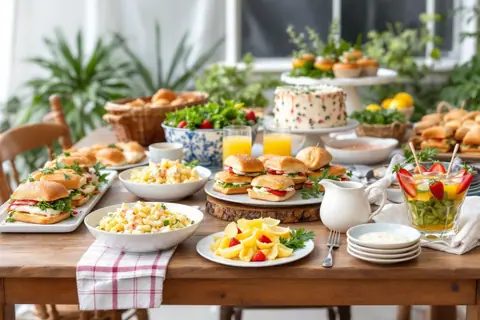
Clear more space than you think you need. A buffet for 40 wants about 8 feet of table for one line, or two sides of a table if you can pull it away from the wall. Set it in the order people eat: plates first, then salads and cold food, then hot food, then bread, with napkins and flatware at the end so nobody juggles a fork while serving.
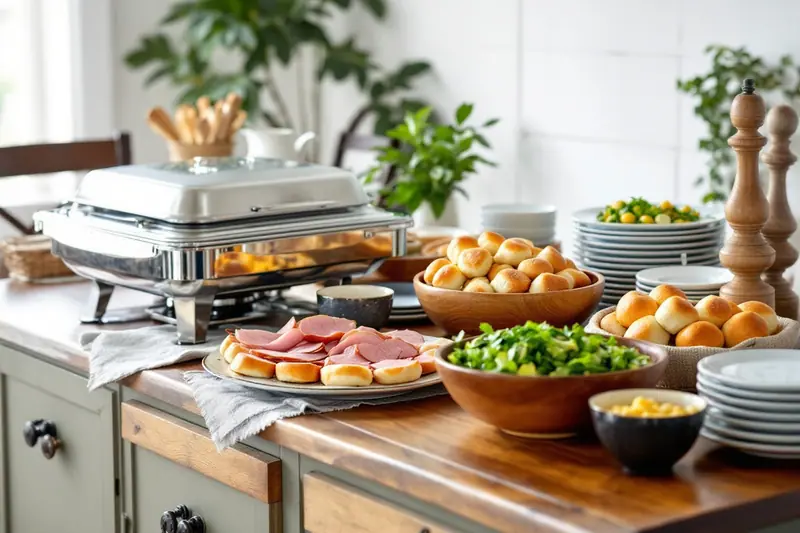
Use a chafing dish for every hot dish. A standard full-size chafer holds one full hotel pan or two half pans, sits on a wire rack over water, and is heated by two cans of gel fuel that each burn about 2 hours. Pour about an inch of hot water into the water pan before lighting, never cold. The chafer keeps hot food hot; it does not heat up cold food. Anything that arrives cold should be reheated in the oven to 165°F (74°C) inside before it goes in.
Cold food goes on platters set over ice, or comes out in smaller rounds from the refrigerator.
Holding temperatures and the two-hour rule
Keep hot food at 140°F (60°C) or above and cold food at 40°F (4°C) or below. Between those two numbers, food should not sit out more than 2 hours in total, or 1 hour on a hot day above 90°F (32°C). An instant-read thermometer belongs on the buffet, out of sight, for checks during the party.
The easiest way to stay inside the rule is to put out less at once. Split each dish into two pans: one on the table, one in the oven at about 200°F (95°C) or in the refrigerator. Swap them halfway through rather than topping up an old pan with new food.
Who replenishes
This is where drop-off parties go wrong. Name one person, and only one, as the buffet keeper for the whole meal. That person checks the table every 15 minutes, swaps pans, wipes spills, moves the last bit of potato salad into a smaller bowl so it looks generous, and watches the fuel. It works best when that person is not the host and not the guest of honor. A teenager who is paid for the afternoon is often ideal.
A second person can handle drinks and ice, and a third can clear plates and run the dishwasher. For a party of 40, three helpers is plenty.
Platters, pans and a budget comparison
Disposable aluminum pans are fine on a chafer, but they look better if the chafer is a nice one and the cold food is on real platters. Wooden boards, white platters and big salad bowls dress up a drop-off spread for very little. If the kitchen sends its own platters, wash them and return them on the agreed day.
A rough budget comparison for an open house of 40 guests:
| Cost | Drop-off | Full service |
|---|---|---|
| Food | $22 per person, $880 | $26 per person, $1,040 |
| Delivery | $50 | Included |
| Staff | 2 paid helpers, 5 hours, about $200 | 3 servers, about $630 |
| Chafers and fuel | Rent 3, about $60 | Included |
| Service charge | None | 18%, about $187 |
| Total | about $1,190 | about $1,857 |
The saving is real, but so is the work: someone has to set up, keep the table and clean up afterward.
A worked example: memorial reception for 50
The family wants a reception at home from 2 to 5 in the afternoon. The order: a platter of small sandwiches (2 per person, so 100 halves), a baked pasta (one full pan serves about 20, so 3 pans), a green salad (one large bowl, half dressed and half on the side), a fruit platter, and cookies and squares (3 pieces per person, so about 150). A sheet cake is optional; the cakes guide has the serving counts.
- 1:00: Delivery. Pasta into a 200°F (95°C) oven, covered. Sandwiches and salad into the refrigerator.
- 1:30: Light the first two chafers with hot water in the pans. Set the table, plates and napkins.
- 1:50: First pasta pan into a chafer, half the sandwiches out, salad dressed.
- 3:00: Swap the pasta pans; replace the sandwich platter with a fresh one.
- 4:00: Cookies and coffee out; hot food pulled after its time is up.
- 5:00: Leftovers into shallow containers and refrigerated within the hour.
Questions from hosts
Can I keep food warm in a slow cooker instead of a chafer?
For one dish, yes, on the warm setting with the lid on. Check it reaches 140°F (60°C). Several slow cookers on one circuit can trip the breaker.
How much extra should I order?
About 10% over your count for a home party. People eat more at afternoon receptions than at evening ones that follow a meal.
What do I do with leftovers?
Refrigerate them within 2 hours of being set out, in shallow containers. Food that sat out the whole party should be thrown away, not sent home with guests.
On a buffet I always write the fuel times on a strip of tape on the chafer lid. Nobody has to guess when it was lit.
Topics: Menus & Planning

Lorna has cooked for church suppers, family reunions and a good many backyard weddings in the Connecticut River valley. She writes about menus, quantities and keeping a party on schedule.