Empress Rice: A Molded Rice Pudding for a Winter Party
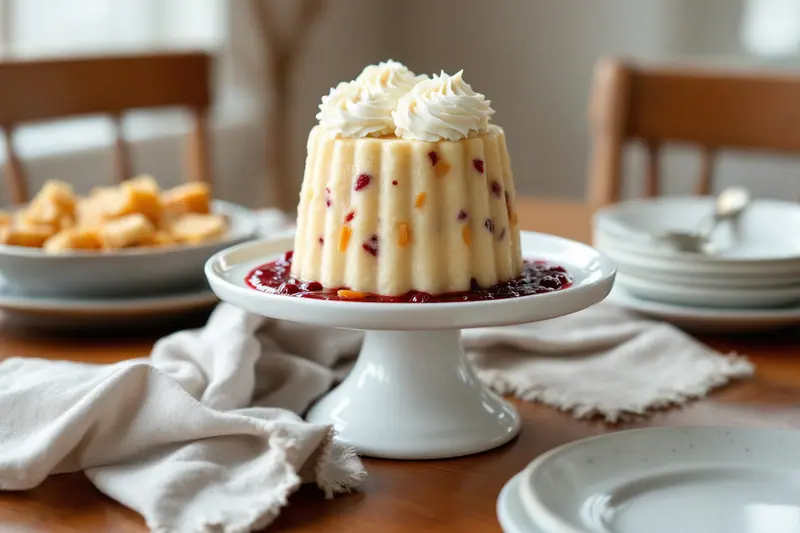
Everyone expects chocolate in February, which is exactly why a molded rice pudding gets such a reaction when it comes out of the kitchen. Empress rice, the old French riz a l'imperatrice, is rice cooked slowly in milk with vanilla, cooled, lightened with whipped cream, set with a little gelatin and dotted with candied fruit that has soaked in brandy or kirsch. It is made the day before, it turns out of a mold in one tall piece, and a fruit sauce poured over the top does the decorating for you. It serves sixteen people from one bowl, which is more than most cakes can say.
It does take several stages. None of them is hard, and each one has a clear sign that tells you it is time for the next. The notes below are about those signs.
The rice: soft, creamy and unrinsed at the end
Use plain long-grain or medium-grain white rice. Arborio works but gives a heavier, stickier set; quick-cooking rice turns to paste. I give the rice a five-minute boil in plain water first and drain it. That washes off loose starch and keeps the milk from scorching, and it means the grains finish cooking evenly in the milk instead of seizing.
The rice then simmers, covered, over the lowest heat you have, in whole milk with a split vanilla bean and a pinch of salt. Light cream or half-and-half makes a richer pudding, but the whipped cream later adds plenty of fat, and milk keeps the flavor clean. Stir every five minutes or so and scrape the bottom. The rice is done when a grain crushed between your fingers has no white core and the pot holds a loose, creamy porridge with some milk still visible. This takes 25 to 30 minutes. Do not drain it. That remaining milk is what the gelatin will set.
Undercooked rice is the single most common fault with this dessert. Gelatin and cold firm up the grains further, so a grain that is barely tender when hot will be chalky at the table.
Gelatin and the setting point
Two envelopes of unflavored gelatin (about 14 g in all) set a 10-cup mold firmly enough to stand on a plate without being rubbery. Sprinkle it over cold water, let it swell for five minutes, then melt it over a pan of barely simmering water until no grains show when you tilt the cup. Stir it into the rice while the rice is still warm, around 100°F (38°C), along with the sugar, so everything dissolves.
Then the rice has to cool to the point where it thickens but has not set. Over a bowl of ice water this takes about 15 minutes of occasional stirring. You are looking for the texture of thick oatmeal that mounds on a spoon. If the rice is still warm and runny when the cream goes in, the cream deflates and the fruit sinks to the bottom of the mold. If it has set into a block, you can rescue it by setting the bowl over warm water for a minute and stirring.
Candied fruit and the liquor
Buy good candied peel and cherries, or candy your own orange peel in January when citrus is cheap. Chop everything to the size of a pea; large chunks make the pudding hard to slice. Soak the fruit in brandy, cognac, kirsch or a ginger liqueur for at least an hour, then drain it and add the soaking liquor to the rice with the gelatin. The classic version uses a cherry liqueur. If children or non-drinkers are coming, soak the fruit in orange juice instead and add a little extra vanilla.
Molds, and turning it out
A 10-cup ring mold, a bundt pan or a glass bowl all work. A ring mold sets fastest and slices most neatly. Rinse the mold with cold water and leave it wet, or brush it very lightly with a neutral oil. Fill it, tap it on the counter to settle the mixture, cover it and chill at least 8 hours.
To unmold, run a thin knife around the top edge, then wrap the outside of the mold in a towel wrung out in hot tap water, or dip it in warm water for 10 seconds. Put the serving plate on top, flip, and give a firm shake. If it does not drop, repeat the warm towel. Wet the plate first so you can slide the pudding into the center if it lands off line.
From the recipe box
Empress rice (molded vanilla rice pudding)
One 10-cup mold, serves 16
- Prep
- 45 min
- Cook
- 35 min
- Rest
- 8 hr
- Total
- 9 hr 20 min
Rice
- 1 cup200 g long-grain or medium-grain white rice
- 4 cups960 ml whole milk
- 11 vanilla bean, split (or 2 tsp pure vanilla extract)
- 1/2 tsp3 g fine salt
Set
- 1 1/2 cups225 g mixed candied fruit (orange and lemon peel, citron, cherries), chopped small
- 1/4 cup60 ml brandy, kirsch or cherry liqueur
- 2 envelopes14 g unflavored powdered gelatin
- 1/2 cup120 ml cold water
- 3/4 cup150 g superfine or granulated sugar
- 2 cups480 ml cold heavy cream
Raspberry sauce
- 12 oz340 g frozen raspberries, thawed
- 1/3 cup65 g sugar
- 1 tbsp15 ml lemon juice
Method
- Soak the chopped candied fruit in the brandy for at least 1 hour, then drain it, keeping the liquor.
- Boil the rice in plenty of water for 5 minutes, drain it in a sieve and return it to a heavy saucepan.
- Add the milk, vanilla bean and salt, bring just to a simmer, cover and cook over very low heat for 25 to 30 minutes, stirring every 5 minutes, until the grains are fully tender and some creamy milk remains.
- Remove the vanilla bean, scrape its seeds into the rice (or stir in the extract) and transfer the rice to a large bowl to cool to about 100°F (38°C).
- Sprinkle the gelatin over the cold water, let it swell for 5 minutes, then melt it over a pan of barely simmering water until clear.
- Stir the melted gelatin, sugar and reserved liquor into the warm rice until the sugar dissolves.
- Set the bowl over ice water and stir every few minutes for about 15 minutes, until the rice is cool and thick enough to mound on a spoon but not set.
- Whip the cream to soft, firm peaks and fold it into the rice in two additions, then fold in the drained fruit.
- Spoon into a rinsed, still-wet 10-cup ring mold, tap it on the counter, cover and refrigerate at least 8 hours or overnight.
- For the sauce, simmer the raspberries, sugar and lemon juice for 5 minutes, press through a sieve and chill.
- To serve, loosen the top edge with a knife, wrap the mold in a hot damp towel for 30 seconds, invert onto a wet plate and lift off the mold. Spoon some sauce over the top and pass the rest.
Notes from the kitchen
- The pudding keeps in the mold, covered, for 2 days in the refrigerator.
- Hold it at 40°F (4°C) or below until 30 minutes before serving.
Variations
Swap the candied fruit for a cup of dried apricots and golden raisins simmered in orange juice until plump. For a chocolate lover, leave out the fruit and serve the pudding with a warm dark chocolate sauce instead of raspberries. In late summer, a sauce of puréed fresh strawberries with a little sugar is lighter and brighter. Orange zest in the milk gives a different, very pleasant pudding with no candied fruit at all.
Making ahead
This dessert exists to be made ahead. The day before the party, cook the rice and set the mold in the evening. The sauce keeps for three days in a covered jar. On the day, unmold it up to two hours before guests arrive and keep it in the refrigerator, loosely tented, with the sauce added only at the table. Once it is out of the mold, it should not sit at room temperature more than two hours in all.
Do not freeze it. Frozen gelatin weeps when it thaws and the rice turns grainy.
Scaling for a crowd
One 10-cup mold gives 16 generous slices or 20 small ones on a dessert buffet with other sweets. For 40 guests at a buffet with two or three desserts, two molds are enough. Make each batch separately: a double batch of rice in one pan cooks unevenly and is hard to stir without crushing the grains. Gelatin scales directly, one envelope per 5 cups of finished pudding.
| Guests (buffet, several desserts) | Molds | Rice | Heavy cream | Gelatin |
|---|---|---|---|---|
| 16 to 20 | 1 | 1 cup | 2 cups | 2 envelopes |
| 32 to 40 | 2 | 2 cups | 4 cups | 4 envelopes |
| 50 to 60 | 3 | 3 cups | 6 cups | 6 envelopes |
Serving
Bring the whole mold to the table before you cut it. Use a thin knife dipped in hot water and wiped between slices, and serve each slice lying on its side with a spoonful of sauce beside it. On a dessert table it sits well next to something dark and rich, such as a bowl of chocolate mousse, and for a smaller dinner you could pair a few slices with the little no-bake chocolate custard. More molded, baked and make-ahead sweets are collected under Cakes & Baking.
When you lift the mold away and the fluting stands up clean, with the red sauce running down into the grooves, you will understand why people used to make this for royalty.
Topics: Cakes & Baking

Abigail bakes the cakes, pies and bread for her family's celebrations in western Massachusetts. She writes about layer cakes, crusts, quick breads and baking ahead.